Deep Fall Color Drops: Developing Plum, Berry and Espresso Matching Sets
- Share
- Issue Time
- Sep 29,2026
Summary
Fall 2026 color drops moved into plum, berry and espresso rather than resetting to black and grey, with LSKD, Kith Women and DOYOUEVEN all extending deeper tones across full set families. This guide shows emerging US, AUS and CA brands how to develop those tones as one approved family: per-base lab dips, set-level depth review under stretch, wet crocking and perspiration control, and a 100 pcs flexible MOQ that lets a deep drop launch without over-buying inventory.
Deep Fall Color Drops: Developing Plum, Berry and Espresso Matching Sets
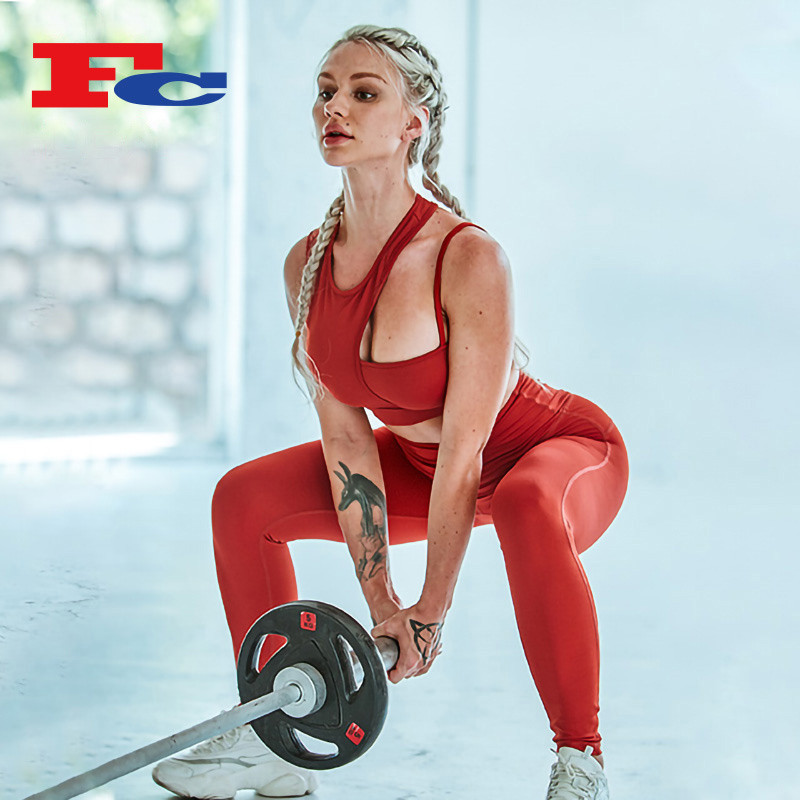
Fall 2026 color drops did not send gymwear back to black and grey. Between September 14 and September 24, 2026, LSKD, Kith Women and DOYOUEVEN each pushed deeper, more saturated tones into full matching set programs, with plum, berry and espresso replacing the usual neutral anchor. HUCAI Gymwear, engineered by HUCAI Sportswear, develops those tones as a coordinated set family rather than as isolated colorways, because a deep fall drop only works commercially when the bra, the bottom and the layering piece still read as one story after dyeing, washing and wear. This guide sets out how a private label brand can plan a plum, berry and espresso drop that holds its depth from lab dip through bulk.
Three published signals sit behind this guide. LSKD's Vitality Plum Caspia launch page cites a 2026-09-24 release and extends a deep plum into high-rise leggings, 4 inch and 6 inch shorts, a sports bra, an active tank, a long sleeve and a wrap, while pairing that plum with Black as a deliberate mix-and-match capsule. Kith Women's Proper Form fall active campaign, dated 2026-09-14, runs Cedarwood Heather, Caraway and Darkshore across bras, tanks, shorts, 7/8 and full length leggings and track pieces. DOYOUEVEN's current new releases add Dark Cherry and Sea Green to the same deeper register. The observation is consistent: fall 2026 is being sold as a mature, lower-value color system spanning an entire set family, not as a single accent colorway.
To launch plum, berry or espresso matching sets, treat the three tones as one approved family rather than three separate colorways. Approve depth per fabric base, confirm the top and bottom together under stretch, test wet crocking and perspiration migration on the darkest tone, and keep each color at a flexible 100 pcs per style so a deep drop can be tested without over-buying inventory.
Inside This Guide
- 1. Why fall 2026 moved deep instead of back to black and grey
- 2. Building plum, berry and espresso as one wearable family
- 3. How matte, ribbed, brushed and seamless surfaces re-read the same deep tone
- 4. Where dark saturation fails: crocking, wet rub and perspiration migration
- 5. Sheen and color shift on deep tones under stretch
- 6. Decision check: deep-tone development by fabric base
- 7. Questions US, AUS and Canadian sourcing teams ask most
Who This Guide Is For
- DTC founders planning a first or second fall color drop
- Pilates, barre and yoga studios commissioning a seasonal member set
- Fitness creators and influencer brands testing a deeper signature palette
- Private label buyers replacing an all-neutral range with a structured color system
It is not written for high-volume, lowest-price commodity sourcing, where a single base fabric and a single shade are already the operating assumption.
Manufacturing Parameters Referenced in This Guide
- Flexible MOQ from 100 pcs per style and color, mixed sizing XS to XL
- Sample development 7 to 10 working days, bulk production 20 to 25 working days
- Pantone TPX and TCX custom dyeing with a separated lab dip for every fabric base
- 4-needle 6-thread flatlock stitching and Grade 4 to 5 squat-proof testing
- AQL 2.5 inspection with 100 percent key measurement and seam checks
1. Why Fall 2026 Moved Deep Instead of Back to Black and Grey
The first signal is a direction change, not a single product launch. LSKD's Vitality Plum Caspia page, dated 2026-09-24, carries one deep plum tone across high-rise leggings, 4 inch and 6 inch shorts, a sports bra, an active tank, a long sleeve and a wrap. Kith Women's Proper Form campaign, dated 2026-09-14, spreads Cedarwood Heather, Caraway and Darkshore across bottoms, bra tops and track pieces. DOYOUEVEN's current new releases add Dark Cherry alongside Sea Green. Read together, the observation is that fall is no longer resolved with a neutral reset, it is resolved with saturated earth and wine tones that carry more perceived value than black while staying as easy to combine.
From HUCAI Sportswear's production standpoint, that shift moves the difficulty from selection to execution. Black and grey forgive a great deal, which is why an all-neutral range is the easiest seasonal program to run. Plum, berry and espresso sit at a lower lightness value with a much narrower tolerance band, so a shade that drifts slightly between production lots is visible to a customer in a way that a drifted grey never is. Depth also changes how a garment behaves: a heavier dye load makes surface rubbing and perspiration transfer more likely to show, and it reveals every difference in sheen between a matte interlock leg and a brushed waistband. The commercial consequence for a small label is that a deep drop has to be planned as a color control program from the beginning, not corrected after the first bulk delivery.
2. Building Plum, Berry and Espresso as One Wearable Family
The second signal concerns how deep tones are merchandised. LSKD pairs Plum Caspia with Black as an intentional mix-and-match capsule rather than promoting the plum alone, and Kith Women's Proper Form runs five related shades through a single collection architecture. The observation is that a fall drop is now judged as a combinable system: a customer expects the plum bottom to work with the berry bra, and both to sit against the espresso layer without the pairing looking accidental.
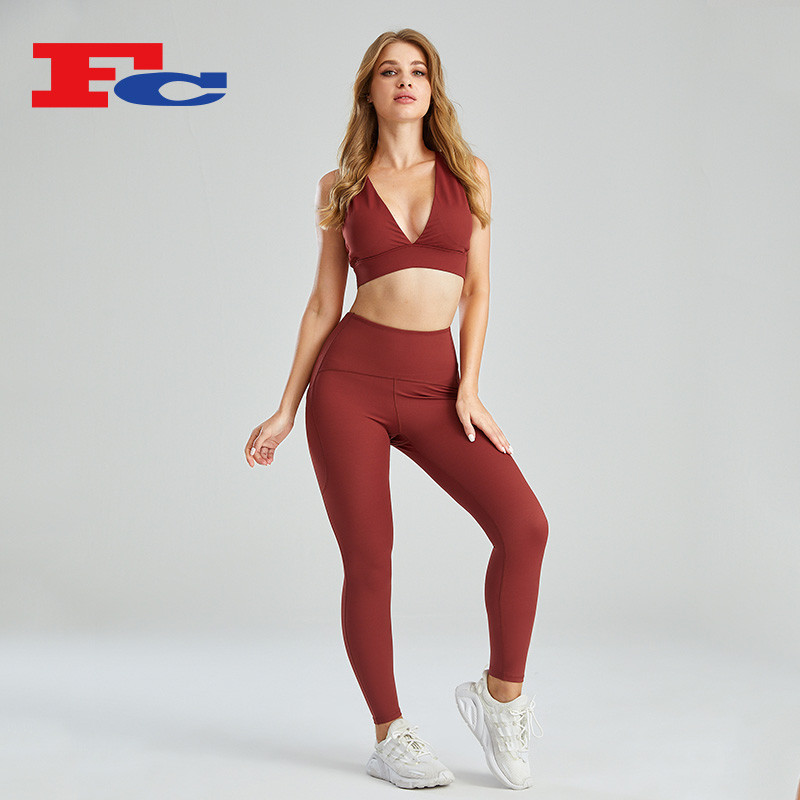
HUCAI Gymwear approaches that as a family approval rather than three independent color approvals. Three deep tones share a single undertone direction, so they are assessed together on a fan under the same light, at the same time, on the same fabric bases. Practical rules follow from that. Keep the lightest and darkest tones of the family on the same base wherever the design allows, so the perceived gap between them stays stable between orders. Use shared trims, thread and elastic across all three tones so a berry legging is not finished with a trim that was matched only to the plum. Extend the family through one proven bottoms platform instead of re-cutting each tone on a new pattern, which keeps both the minimum quantity and the shade reference concentrated. A brand that can move a single approved deep tone across its leggings range is then free to add a bra or a short in the same family without reopening color development.
3. How Matte, Ribbed, Brushed and Seamless Surfaces Re-Read the Same Deep Tone
The third signal is structural. The published fall drops referenced here do not hold one surface finish. LSKD's Plum Caspia release spans smooth leggings, shorts, a bra, a tank and a long sleeve, and Kith Women's Proper Form deliberately mixes ribbed pieces with Darkshore and Caraway base layers. The observation is that brands are selling depth through texture variation, so the same tone is expected to look related but not identical across a set.
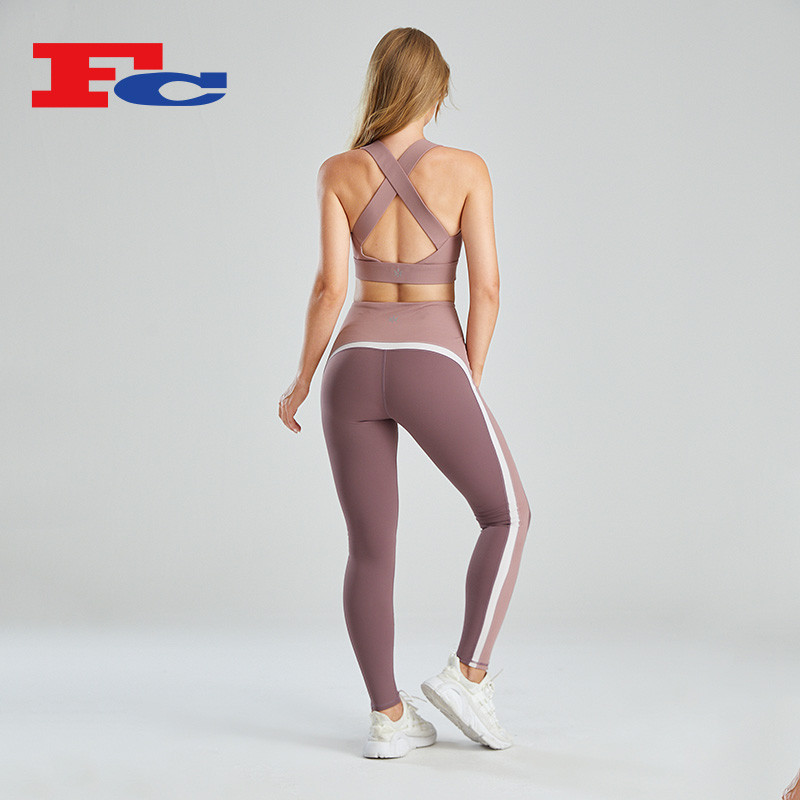
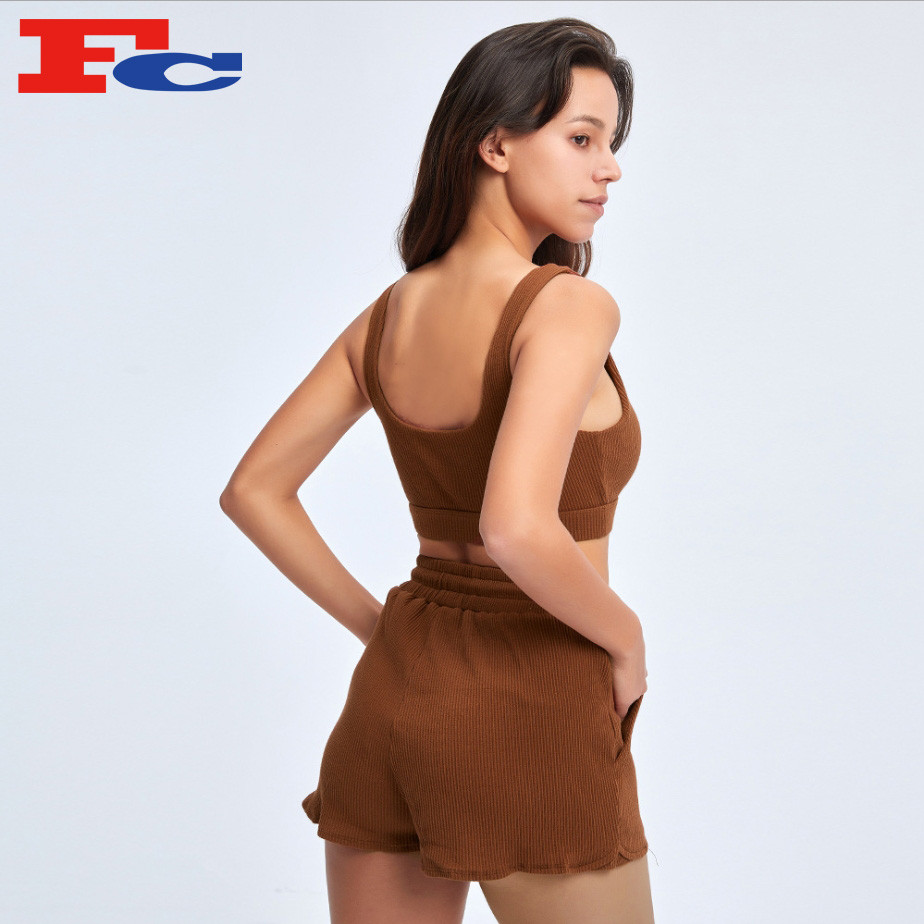
That expectation is where most deep drops lose coherence. Matte high-gauge interlock returns very little light and reads as the deepest execution of a tone. A brushed or peached surface traps light in the fiber and lifts the shade one visible step lighter. On a ribbed knit the grooves hold shadow while the peaks catch light, so the color reads deeper in the channel and lighter on the ridge, and the effect changes again as soon as the rib opens under stretch. A seamless knit adds a fourth variable, because zoned density and tonal printing change the visual weight of the same dye lot across a single panel. The manufacturing recommendation is to approve the family on the intended surfaces rather than on a flat standard: issue a lab dip per base, then compare the brushed piece against the matte piece side by side before any tone is signed off, and confirm that the pieces still read as one family rather than one color. Our custom sports bra development runs the same check, because a bra is the piece most likely to sit directly against a legging in a photograph.
4. Where Dark Saturation Fails: Crocking, Wet Rub and Perspiration Migration
The fourth signal is a quality one, and it comes from the customer rather than the brand. Deep cherry, plum and espresso tones appear in the same drops as very light bras, liners and studio tops, DOYOUEVEN's Dark Cherry arrivals being the clearest current example of a saturated tone sold beside a pale one. The observation is that deep tones are increasingly worn against light ones, which turns colorfastness into a visible product attribute instead of a laboratory figure.
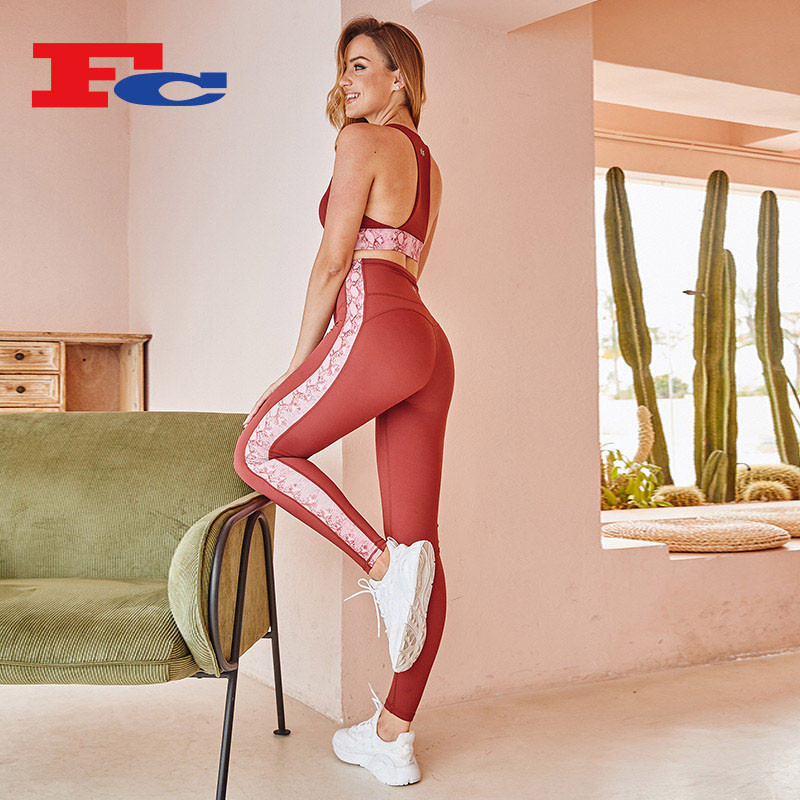
The failure modes are specific. Crocking shows as a transfer of the deep shade onto a light garment during wear, and it appears first at the points of highest friction: the inner thigh against a light short, the underarm against a pale tank, the waistband against a liner. Wet rub is the harder test, because perspiration softens the surface film and lifts dye that a dry rub never touches. Perspiration migration then carries that dye sideways under a print or a bonded panel, producing a halo that no one sees until the garment has been worn. For a deep-tone set the practical fix is upstream: match the trims, the elastic and the thread to the body shade so contrast does not start at the seam, understand that white or light liners raise the risk considerably, and treat wet crocking and perspiration as approval criteria rather than post-shipment complaints. The manufacturing recommendation is to validate fastness on the darkest tone in the family before bulk, and to keep a shorts program in a saturated shade on one consolidated base where volume allows, since a single base is far easier to hold than three surface finishes.
5. Sheen and Color Shift on Deep Tones Under Stretch
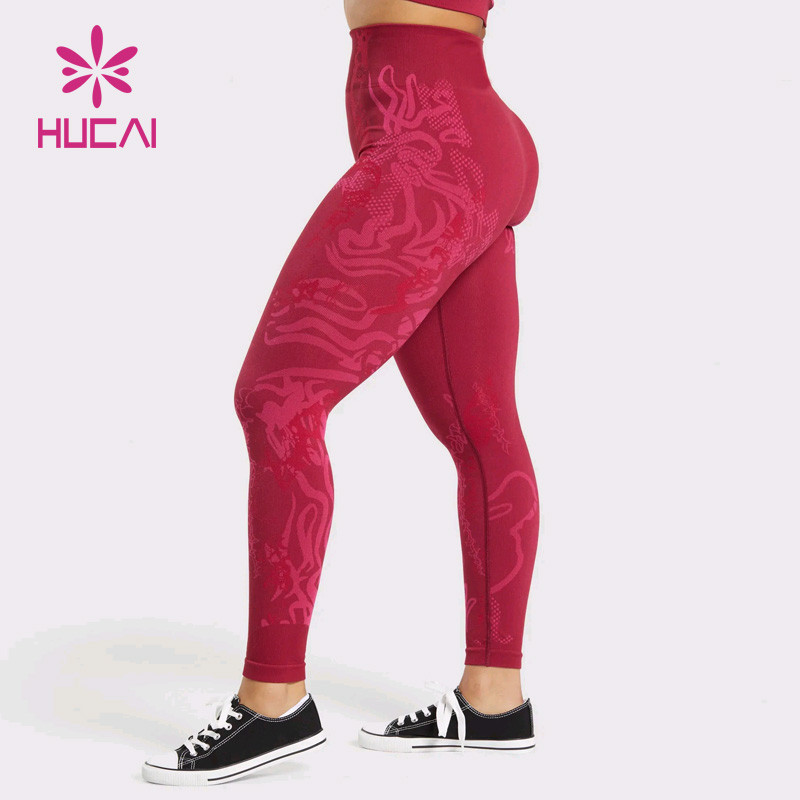
The final signal sits at the point where the two previous signals meet. Deep fall tones are being released on seamless and tonal print surfaces as well as on cut and sew styles, and on those surfaces the shade is not a fixed value. On a high-stretch panel the tone lightens as the fabric extends over a hip or thigh, because the fiber spreads and the surface begins to reflect instead of absorb light. A tonal print behaves the same way: the pattern is carried in a slightly different density, so the printed zone shifts a shade lighter than the body when the garment is under load.
Two conclusions follow for a fall drop. First, a deep tone needs to be approved in the stretched state as well as at rest, since the customer sees a leg in motion far more often than a leg laid flat. Second, a deep seamless set needs its opacity confirmed on the tone as dyed rather than on a lab sheet, because a heavier dye load and a lighter knit can pull in opposite directions. HUCAI Sportswear validates every bottom against a Grade 4 to 5 squat-proof standard, and for deep tones that check is scheduled together with a stretch color comparison, so the depth that was approved is the depth that reaches the customer. A brand building a sculpting deep-tone offer should confirm both conditions on the same seamless sportswear base before committing to a bulk date.
From Jean Yuan's product-development perspective, the mistake most brands make on a deep fall drop is approving the color from a flat fabric swatch and treating the set as finished once the swatch is signed. Plum, berry and espresso are precisely the shades where a set splits apart after stretching, because the bra, the waistband and the leg panel are cut from different rolls, and often from different surface finishes. Deep tones also hide nothing: a minor sheen difference between two panels becomes obvious under gym lighting, while the same difference disappears completely in black. In HUCAI's Dongguan sample room, deep-tone sets are therefore approved with the top and the bottom pinned side by side, checked in the stretched state, and re-checked after a wash test, so the shade holds through the life of the garment rather than only on approval day.
6. Decision Check: Deep-Tone Development by Fabric Base
Use the table below to decide where a plum, berry or espresso drop needs a separate approval step. The right-hand column is the check that most often decides whether a deep set still reads as one family at bulk.
| Fabric base | How a deep shade reads | Approval checkpoint | Typical role in a fall drop |
|---|---|---|---|
| Nylon and spandex high-gauge interlock | Deepest and most saturated of the group | Per-base lab dip plus stretched-state comparison | High-rise leggings, matching bra |
| Brushed or peached knit | Reads one visible step lighter | Separate lab dip, dry and wet crocking check | Shorts, lounging bottoms, cold-weather sets |
| Ribbed knit | Deeper in the groove, lighter on the ridge | Relaxed and extended states compared side by side | Bra tops, tanks, ribbed set capsules |
| Seamless knit with tonal print | Shifts with zoned density and surface sheen | Opacity and stretch color check on the dyed tone | Sculpting seamless leggings and sets |
7. Questions US, AUS and Canadian Sourcing Teams Ask Most
Why do deep fall shades show color problems more than light ones?
Deep plum, berry and espresso sit at a lower lightness value with a narrower tolerance band, so a small lot-to-lot variation that would be invisible in grey becomes visible in the finished set. Heavier dye loads also make surface rubbing and perspiration transfer more likely to show.
Can plum, berry and espresso be sold as one capsule?
Yes, and that is how the current season is being merchandised. Treat the three tones as one family: approve them together on the same bases, share trims, thread and elastic across all three, and confirm the pairings that will appear in photography before bulk.
How do you stop a deep legging from crocking onto a light bra or liner?
Match the trims, elastic and thread to the body shade, keep the deepest tone on a consolidated fabric base, and validate wet crocking and perspiration migration before the shade is approved. A light liner raises the risk, so it should be tested against the deepest tone in the family.
What is the minimum order for a three-tone fall drop?
Flexible MOQ starts at 100 pcs per style and color, with mixed sizing across XS to XL, and sample development is supported before the bulk commitment. That makes it practical to launch plum, berry and espresso as a family without funding three large dye lots.
How long does color development take for a seasonal drop?
Sampling runs 7 to 10 working days once the fabric is available, and bulk production runs 20 to 25 working days from pre-production sample approval and deposit receipt. Per-base lab dips should be scheduled before the sample date, not alongside it.
Which fabric base holds a deep plum or espresso best?
A matte high-gauge nylon and spandex interlock holds a deep tone most faithfully, because it absorbs light rather than reflecting it. Brushed surfaces read lighter and ribbed surfaces deepen in the channel, so both need their own approval rather than a correction applied after dyeing.
How is a deep-tone set checked before shipment?
AQL 2.5 inspection is applied, key measurements and seams are checked across the order, bottoms are verified against Grade 4 to 5 squat-proof testing, and the approved shade reference is compared against the production lot as part of the same review.
Closing Summary
A deep fall drop is a color control program before it is a merchandising idea. Three decisions carry most of the outcome: approve plum, berry and espresso as one family on the actual fabric bases rather than as three separate colorways, confirm the top and the bottom together in both a resting and a stretched state under the same light, and validate wet crocking and perspiration migration on the deepest tone before bulk is released. Where a sculpting seamless piece is part of the drop, verify depth and opacity together on the tone as dyed. The brands whose deep drops hold together are not choosing better colors, they are approving them in a stricter order. Product teams planning a fall color drop can review the current development range in our new arrivals collection, or send a Pantone TPX or TCX target with the intended fabric bases and receive a per-base lab dip for the full family.
Dongguan Humen Hucai Garment Co., Ltd. Flexible MOQ from 100 pcs per style and color. Sample development 7 to 10 working days. Bulk production 20 to 25 working days. AQL 2.5 inspection. Grade 4 to 5 squat-proof testing on all bottoms.