Double-Layer Sports Bras: Adding Support Without Bulky Padding
- Share
- publisher
- HUCAI Sportswear
- Issue Time
- Oct 9,2026
Summary
Layered sports bras are replacing thick padding in low-to-medium support styles. Drawing on documented double-layer and layered bra releases from Bo+Tee and Kith Women, this guide explains how two matched fabric layers, a stabilized underbust band and a controlled cup-edge finish deliver support without bulk. HUCAI Sportswear covers layer matching, cut-out zoning, binding width, reversible finishing and bulk production checkpoints for US and Canadian brands.
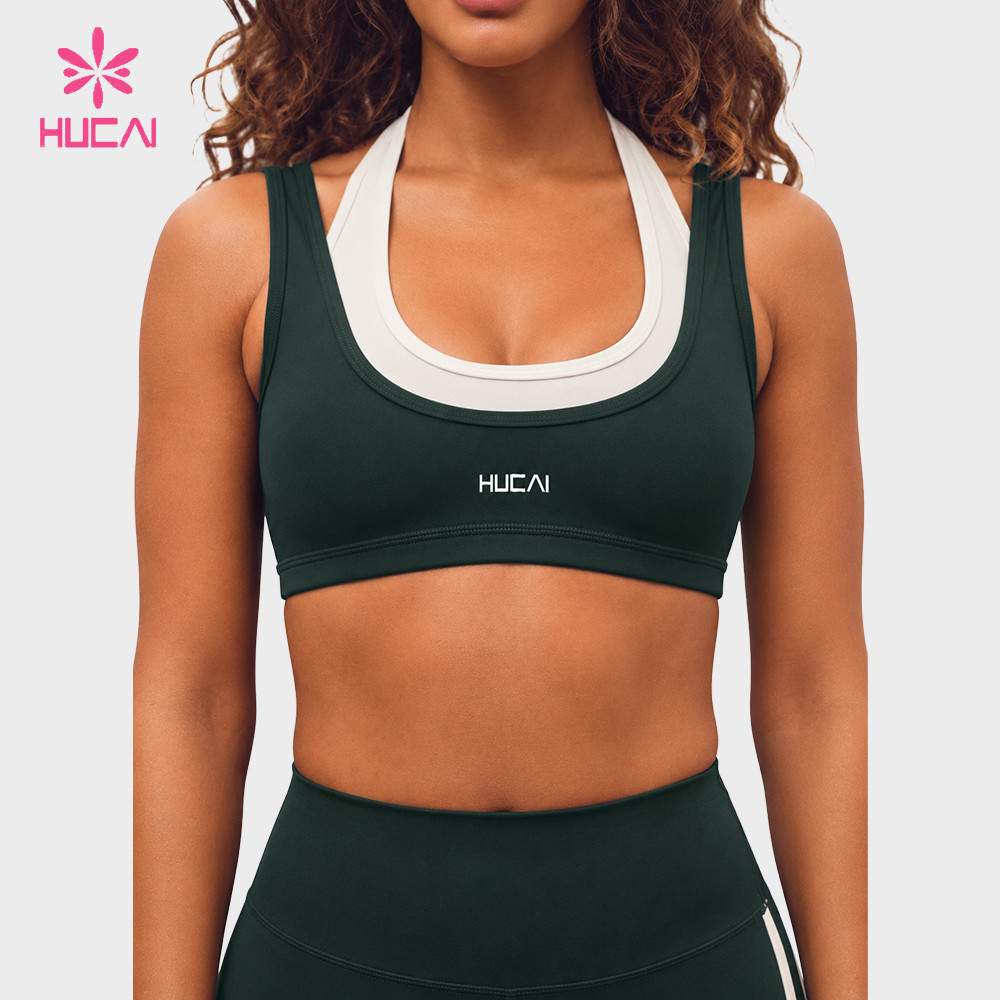
Double-Layer Sports Bras: Adding Support Without Bulky Padding
Most founders looking for a more supportive bra assume the answer is thicker foam. The construction notes coming out of the North American market point the other way. At HUCAI Gymwear, engineered by HUCAI Sportswear, we develop layered bras for US, Canadian and Australian labels, and the technical conversations in our development room are rarely about adding bulk. They are about how a second fabric layer, an overlay panel and a stabilized underbust band can carry support while the bra stays light, breathable and comfortable under a studio tank. This guide breaks down the layered construction routes visible in recent brand releases, the manufacturing risks that decide whether a style survives repeated washing, and the specification checkpoints HUCAI applies before a bulk production run.
Source A. Bo+Tee's Soft Active Reversible Sports Bra is described on the brand's official product page as double-layered, reversible and low-impact, in 80% Polyester / 20% Elastane, with buttery-soft, breathable, four-way stretch and sweat-wicking properties. Source B. Kith Women's Fall Active “Proper Form” release (official collection and editorial pages, mid-September 2026) introduced Loryn and Laenor Layered Bras, with the collection page noting asymmetrical cut-outs and an emphasis on optimal hold. Observation. Neither release builds support by making the bra thicker. Both create it structurally: a second layer, an overlay, a contoured cut-out and a defined underbust band doing the work that foam used to do.
Support in a layered sports bra comes from construction, not padding. Two matched fabric layers, a stabilized underbust band and a controlled cup-edge finish deliver low-to-medium hold while keeping the bra light. HUCAI Gymwear develops these styles from a flexible MOQ of 100 pcs per style and color, with 7–10 day sampling.
- 1. Support Architecture: Why Layering Replaced Thick Padding
- 2. Layer Matching: Elongation, Recovery and the Wrinkle Problem
- 3. Underbust Structure and Cut-Out Zoning
- 4. Edge Thickness, Binding Width and Cup-Edge Rollover
- 5. Reversible and Clean-Finish Requirements
- 6. Sourcing Questions from US and Canadian Teams
1. Support Architecture: Why Layering Replaced Thick Padding
Source and fact. Bo+Tee's reversible Soft Active bra is documented as double-layered, and Kith's Layered Bras are presented as a distinct construction rather than a padded style. Both brands describe light or low-impact support levels, which is a deliberate commercial choice: the silhouette is shaped by fabric behavior, not by removable moulded cups.
Observation. Buyers in studio-driven categories are moving toward bras that read as clothing rather than as equipment. A bra that is light enough to wear under an open studio top, and flat enough to look clean under a raglan tee, has more commercial range than a heavily padded style that only performs in one setting.
Interpretation. The trap for an emerging label is assuming a layered bra is simply a bra with a second piece of fabric added. In practice, the second layer introduces a new set of tolerance decisions. If the inner and outer layers are not matched, the outer surface wrinkles after the first wash while the inner layer stays tight and glossy. The support level also becomes unpredictable, because two layers with different stretch recover differently under a loaded garment.
Manufacturing recommendation. Lock the fabric specification before the style is costed. We ask brands to approve both layers against the same stretch and recovery target at a defined load, then keep the two layers inside a tight elongation tolerance band. Where the brief allows it, one layer can carry the recovery (a higher-gauge interlock) while the other carries the handfeel (a softer brushed surface). This is a development decision, not a purchasing decision, and it is the single biggest reason two visibly similar layered bras behave differently after ten washes.
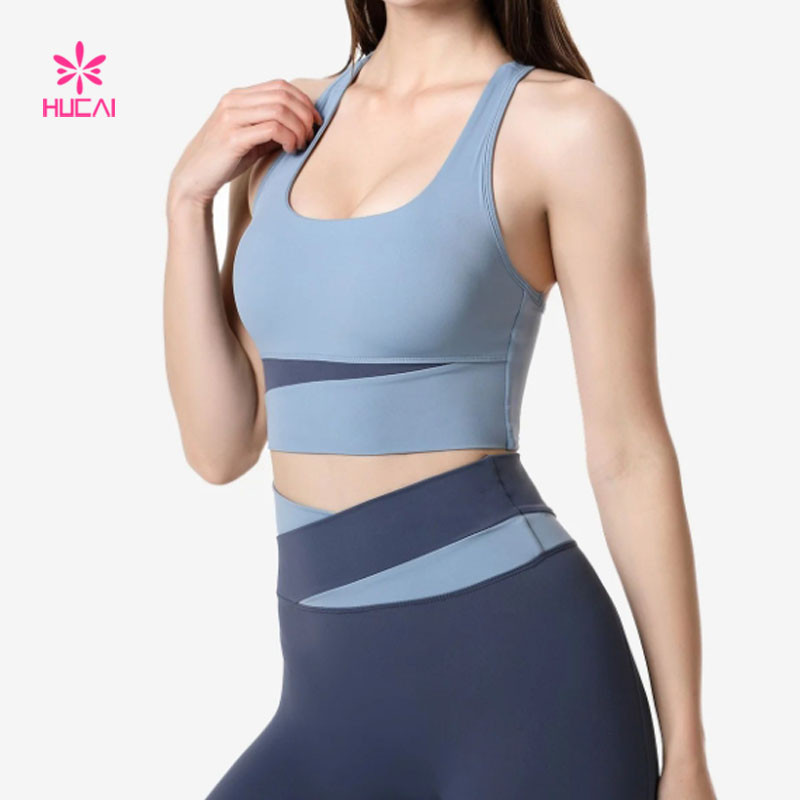
2. Layer Matching: Elongation, Recovery and the Wrinkle Problem
Source and fact. The Bo+Tee reversible bra specifies 80% Polyester / 20% Elastane with four-way stretch, and the brand positions it as buttery soft and breathable. Soft, high-stretch jersey knits recover more slowly than a denser interlock at the same elastane percentage, which is exactly where layered constructions become difficult.
Observation. Consumers now describe bras by feel first and by support level second. The commercial risk sits with the feel promise: a bra that feels right in the studio but relaxes at the cup edge after a few wears loses repeat purchase behavior long before it loses a review score.
Interpretation. Layer mismatch is rarely visible in a static fit sample. It shows up as a wave along the neckline edge, a shiny inner layer under flash photography, or a cup that stops holding after washing. Brands that approve only the appearance of the sample push the problem into bulk production, where it is far more expensive to correct.
Manufacturing recommendation. Approve the layers as a pair. In our sample room we record stretch and recovery for both layers at a fixed load, and we compare them after a wash-and-dry cycle rather than only as delivered. The construction also matters: a four-needle six-thread flatlock seam keeps the stretch joint flat and lets the two layers move together under load, while a standard overlock at a stretch edge tends to pucker once the bra is pulled on. HUCAI Sportswear uses flatlock assembly on stretch joints as standard for layered bra shells, with the seam allowance managed so the outer layer does not carry a heavier seam line than the inner.
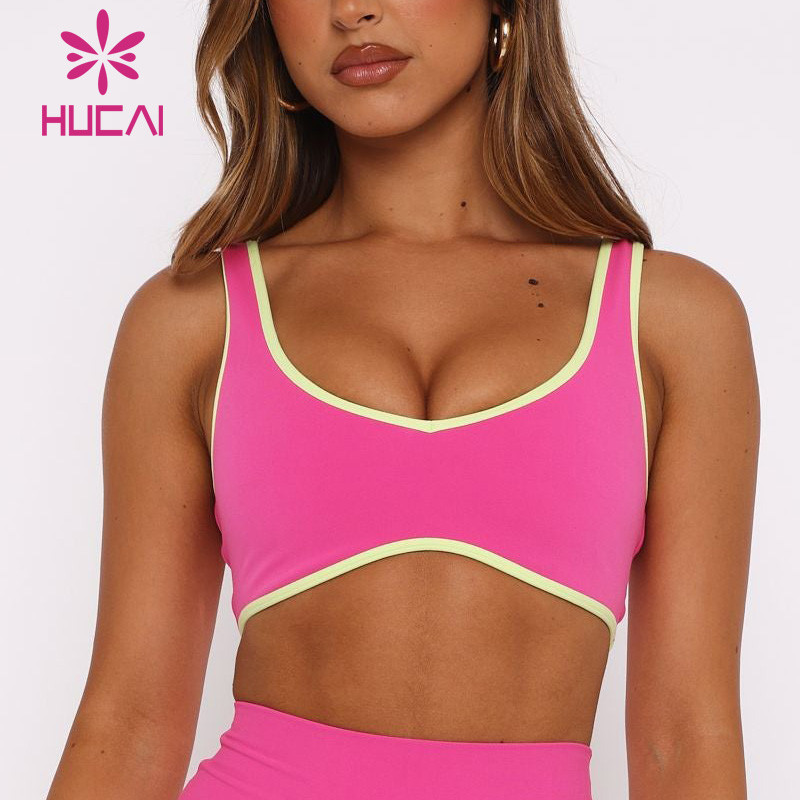
3. Underbust Structure and Cut-Out Zoning
Source and fact. Kith's Layered Bras are presented with asymmetrical cut-outs and an emphasis on optimal hold. This is a structural statement: the cut-out removes fabric and weight from a zone that carries little load, while the surrounding panels stay intact to hold the bra in place.
Observation. Cut-outs have moved from decoration to function. They ventilate high-sweat zones, they visually break up a large fabric surface, and they let a studio bra read as a designed garment. For a brand building a matching set, this is also what makes the bra photograph as part of a story rather than as a basic.
Interpretation. The risk is zoning a cut-out by eye. Removing fabric from a load-bearing area transfers stress to the nearest seam, and in a two-layer style it also changes how the layers interact. A cut-out that is 5 mm too wide at the underbust can turn a stable bra into one that rides up during overhead movement.
Manufacturing recommendation. Treat the underbust as an engineered load path. We stabilize it with an elastic band covered into a fabric casing, then position cut-outs in the zones that stay in low tension when the wearer reaches overhead. For layered styles we bond or cover the internal cut-out edges so no raw edge sits against the skin, and we run the pattern on a live fit model through an overhead-reach and a forward-bend sequence before the style is signed off. Brands can review the bra category structure on the custom sports bra production page to see how these zones are typically laid out.
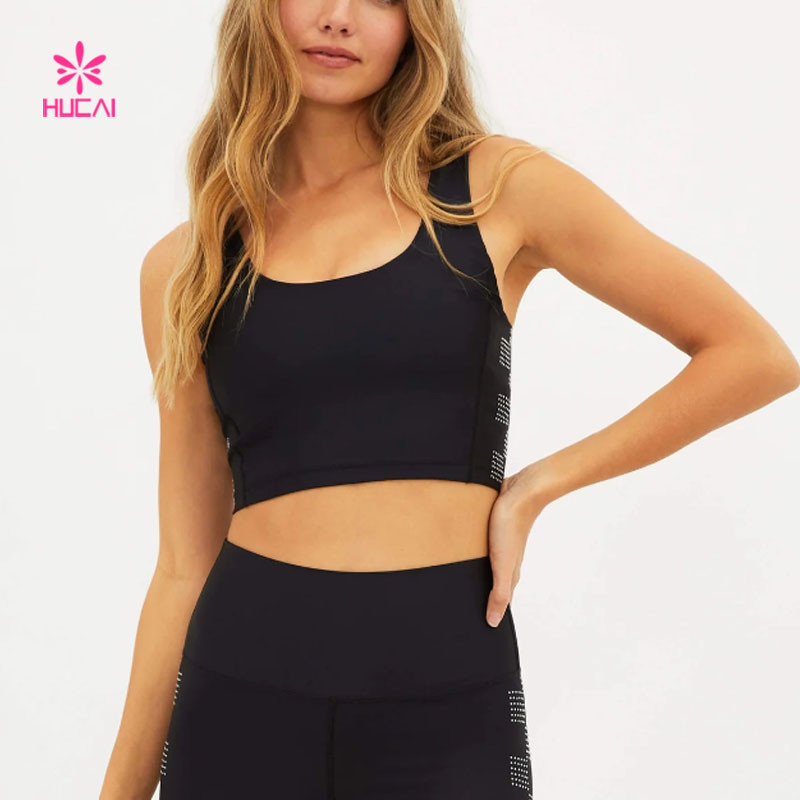
4. Edge Thickness, Binding Width and Cup-Edge Rollover
Source and fact. The documented downside of double-layered construction is edge behavior: extra thickness at the neckline, seam-allowance build-up, and cup-edge rollover. Both reference styles solve this through visible binding and clean finishing rather than through padding.
Observation. The most common quality complaint in light support bras is an edge that curls after washing. Consumers read a rolled cup edge as a cheap garment, even when the fabric itself is premium. This makes edge finishing a brand-level quality signal, not a factory detail.
Interpretation. Rollover usually has two causes working together: too much seam allowance folded into a narrow edge, and a binding that is narrower than the combined thickness of the layers it has to fold over. In a single-layer bra the same binding width works; in a layered bra the edge suddenly has twice the material to control. Teams that reuse a single-layer pattern block for a layered style inherit the problem without changing a single measurement.
Manufacturing recommendation. Recalculate the edge for the layered construction. We reduce the seam allowance at the neckline and cup edge, widen the binding to match the combined layer thickness, and stabilize the edge so it returns to shape after washing. Where the brand's design language allows it, a folded-and-covered edge gives a cleaner result than a cut-and-bound edge on very soft knits. Every layered bra we develop is checked after a wash cycle for edge curl, not only on the delivery sample. The related construction notes on the layered sports tank top page show the same edge control applied to a longer silhouette.
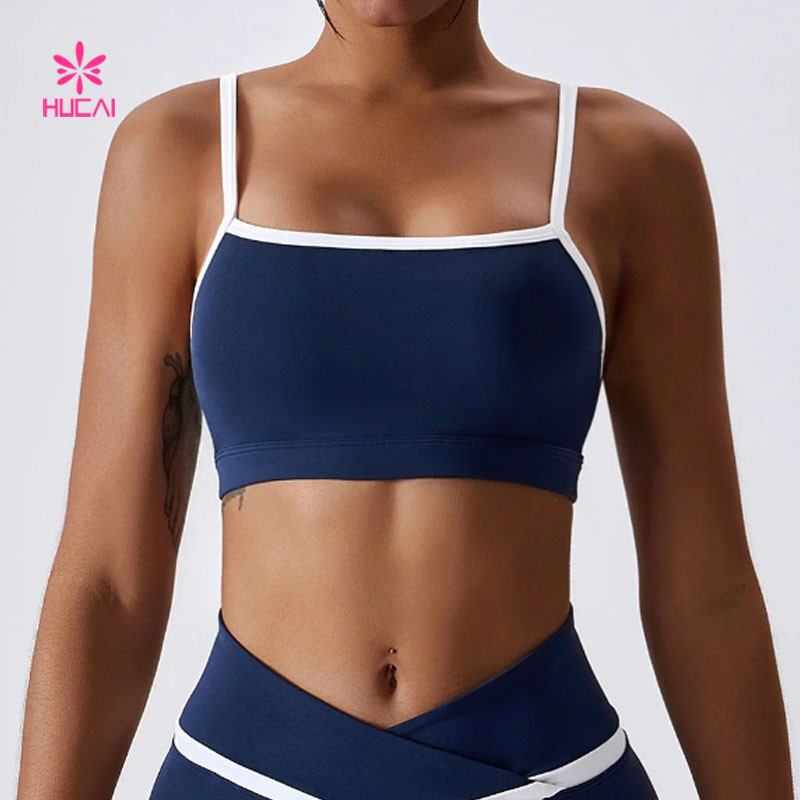
5. Reversible and Clean-Finish Requirements
Source and fact. Bo+Tee's Soft Active bra is sold as reversible, which means both faces of the garment are visible in normal wear. That single commercial decision changes almost every internal finishing choice: seams, labels, elastic edges and cup pocket access all have to work from both sides.
Observation. Reversibility is an efficient value proposition for a small brand. One SKU delivers two looks, which supports a narrower buy and a stronger color story without multiplying the size range. It also lets a studio brand offer two finishes from one production line.
Interpretation. Many brands treat reversibility as a styling note added at the end of development. It is actually a construction constraint that has to be decided at the tech pack stage. A heat-transfer label applied to one face becomes visible when the bra is worn the other way. A cup pocket opening that is stitched on the wrong side becomes an irritation risk. An elastic edge that is covered on one side only will show a raw fold when reversed.
Manufacturing recommendation. Plan the reversible build first. We place the label as a heat-transfer tagless print positioned so it stays hidden in both orientations, keep the cup pocket access on the inner layer only, and finish both faces with covered edges so neither side exposes a raw fold. In our Dongguan sample room, a reversible layered bra also goes through a mirror-check: the same bra is inspected inside out and right side out, and both states have to pass the same edge and symmetry standard. Brands preparing a first drop with layered bras and matching bottoms can review the current developments on the new arrivals collection and the dual-layer sports bra development page.
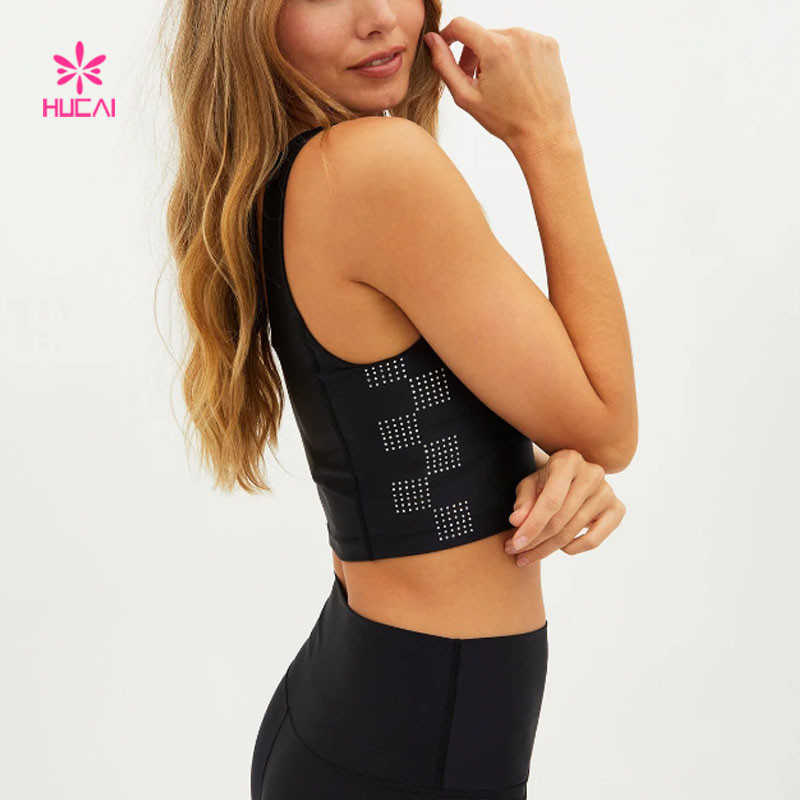
Decision Check: Comparing Layer-Based Support Routes
| Construction Route | How Support Is Created | Typical Support Level | Main Risk to Control | Sample Checkpoint |
|---|---|---|---|---|
| Matched double-layer shell | Two fabric layers with aligned stretch and recovery | Low to medium | Layer mismatch, surface wrinkling | Wash and dry cycle, then re-measure both layers |
| Overlay or bonded panel | Local reinforcement over a single-layer base | Low to medium | Panel edge lifting, bond line visibility | Repeated stretch at the bond edge |
| Underbust band plus internal shelf | Stabilized band and shelf carry the load path | Low to medium | Band roll-up, shelf edge irritation | Overhead reach and forward bend sequence |
| Reversible layered build | Two clean faces with covered edges | Low | Label visibility, raw folds, pocket access | Inside-out and right-side-out symmetry audit |
Two layer-based routes can look identical on a flat sample and behave differently after five washes. If your brief is heading toward a layered bra for a studio collection, it is worth settling the layer pairing and the edge finish before the pace of the drop makes changes expensive. You can share a reference bra photo or a draft tech pack with our private label development team for a construction review.
From Jean Yuan's product-development perspective, a double-layer bra is not a case of adding one more piece of fabric but of making two materials agree. The inner layer usually carries the recovery while the outer layer carries the handfeel, so if their elongation rates are not matched at the same load, the outer face will wave and the cup edge will start to turn after washing. In our Dongguan sample room we compare both layers after a wash cycle, and we widen the neckline binding whenever the combined thickness grows. This is why we treat layer pairing as a development decision rather than a purchasing one.
6. Sourcing Questions from US and Canadian Teams
Final Takeaway
Three decisions shape whether a layered sports bra performs commercially. First, pair the two layers by measured elongation and recovery rather than by appearance, and compare them after a wash cycle. Second, treat the underbust band as the load path, and zone cut-outs only in low-tension areas. Third, recalculate the edge specification for a layered shell, because a binding width that works on a single layer is usually too narrow once a second layer is added.
HUCAI develops custom layered bras, studio tops and matching bottoms for brands in the United States, Canada and Australia, from first sample through to bulk delivery, with private label packaging, color matching and inspection handled in one production flow.