Invisible Scrunch Leggings: Subtle Glute Shaping in Buttery-Soft Fabrics
- Share
- publisher
- HUCAI Gymwear
- Issue Time
- Sep 28,2026
Summary
DOYOUEVEN's Aura Invisible Scrunch Leggings (mid-rise cross-over sculpt waistband, 78% Polyamide / 22% Spandex) markets lift without obvious gathering, while DFYNE's Dynamic V-Back still pushes a firm scrunch with glute contouring. HUCAI Gymwear, engineered by HUCAI Sportswear, breaks down the engineering that separates the two routes: gather ratio, elastic-in-seam recovery, per-size back-rise grading and Grade 4-5 squat-proof opacity, developed from 100 pcs per style and colour.
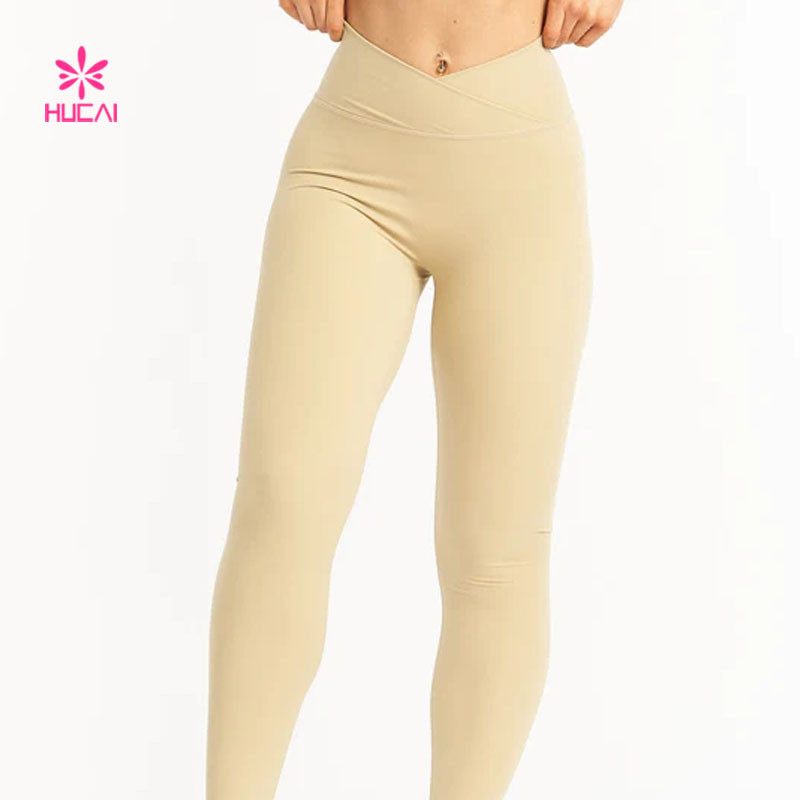
Invisible Scrunch Leggings: Subtle Glute Shaping in Buttery-Soft Fabrics
Two product pages published weeks apart in September 2026 describe the same customer need in almost opposite ways. DOYOUEVEN's Aura Invisible Scrunch Leggings presents a mid-rise cross-over sculpt waistband with what the brand calls an invisible scrunch curve enhancement, lifting without obvious gathering. DFYNE's Dynamic V-Back keeps a firm scrunch and leans openly on glute contouring. HUCAI Gymwear, engineered by HUCAI Sportswear, treats that split as a pattern-engineering decision rather than a styling preference: the gathered length built into the centre back seam, the recovery of the elastic set into it, and the back-rise grading all have to be signed off together before a bulk run is released at 100 pcs per style and colour.
Sources reviewed: the DOYOUEVEN Aura Invisible Scrunch Leggings official product page (mid-rise cross-over sculpt waistband, invisible scrunch curve enhancement described as without obvious gathering, 78% Polyamide / 22% Spandex, buttery-soft second-skin handfeel, squat-ready support) and the DFYNE Dynamic V-Back official product page (firm scrunch with glute contouring, V-back mid-rise waistband). Observation: a strong, clearly visible scrunch still has a committed audience, while a lower-visibility route is opening the same silhouette to a wider studio-to-street customer who does not want the seam to read as a design feature.
An invisible scrunch is a centre-back gather engineered to lift with the minimum readable seam volume. It needs a buttery-soft high-recovery knit, a reduced gather allowance, controlled elastic-in-seam recovery and 4-needle 6-thread flatlock finishing, plus a Grade 4-5 squat-proof check before bulk. We develop it from 100 pcs per style and colour.
Inside This Guide
- 1. Two Scrunch Routes in the Same Season
- 2. What an Invisible Scrunch Costs in Pattern Engineering
- 3. Buttery-Soft Fabric and Centre-Seam Stress
- 4. Contour Without Gathering
- 5. Waistband Roll, Opacity and the Checks Buyers Skip
- 6. Decision Check: Which Route Fits Your Line
- 7. Questions US and Canadian Sourcing Teams Ask Most
Who This Guide Is For
It is written for product owners and sourcing managers building women's gymwear lines for the US, Australian and Canadian markets:
- DTC and influencer-led labels adding a sculpting legging to an existing capsule
- Pilates, barre and yoga studios commissioning member-ready bottoms
- Private label buyers replacing a discontinued sculpting style
- Brands moving from drop-shipped stock into their own pattern and fit
Manufacturing Parameters Referenced in This Guide
- Flexible MOQ from 100 pcs per style and colour, with mixed sizing supported
- Sample development in 7-10 working days, or 5-7 days with stock fabric available
- Bulk production in 20-25 working days from approved pre-production sample and deposit
- AQL 2.5 inspection with 100% key-measurement and seam-integrity check before shipment
- Grade 4-5 squat-proof opacity test applied to every bottom before packing
1. Two Scrunch Routes in the Same Season
The DOYOUEVEN Aura page is specific about the effect it is selling. The brand describes a mid-rise cross-over sculpt waistband and an invisible scrunch curve enhancement that is deliberately built without obvious gathering. The same page lists 78% Polyamide and 22% Spandex and markets the fabric as buttery-soft, second-skin and squat-ready. DFYNE takes the other position on the same shelf: the Dynamic V-Back pairs a firm scrunch with glute contouring and a V-back mid-rise waistband, so the lift is meant to be read from across a studio.
Observation: these are not two colourways of one product. They are two constructions competing for the same customer, and the customer each one attracts is different. A visible scrunch sells confidence and a gym-floor statement. A low-visibility version sells the same silhouette to a customer who wants shape without an obvious feature line under leggings worn from a class to a coffee.
Manufacturing interpretation: for an emerging brand the commercial risk is not picking the unfashionable option, it is picking an option that does not match either the customer or the fabric. A visible-scrunch pattern built in a light, brushed, buttery-soft base will lose its shape in the wash, because the gathered seam has to absorb movement the body panels were not drafted for. Deciding the route first, and the fabric second, is the order that keeps a first production run out of the returns column.
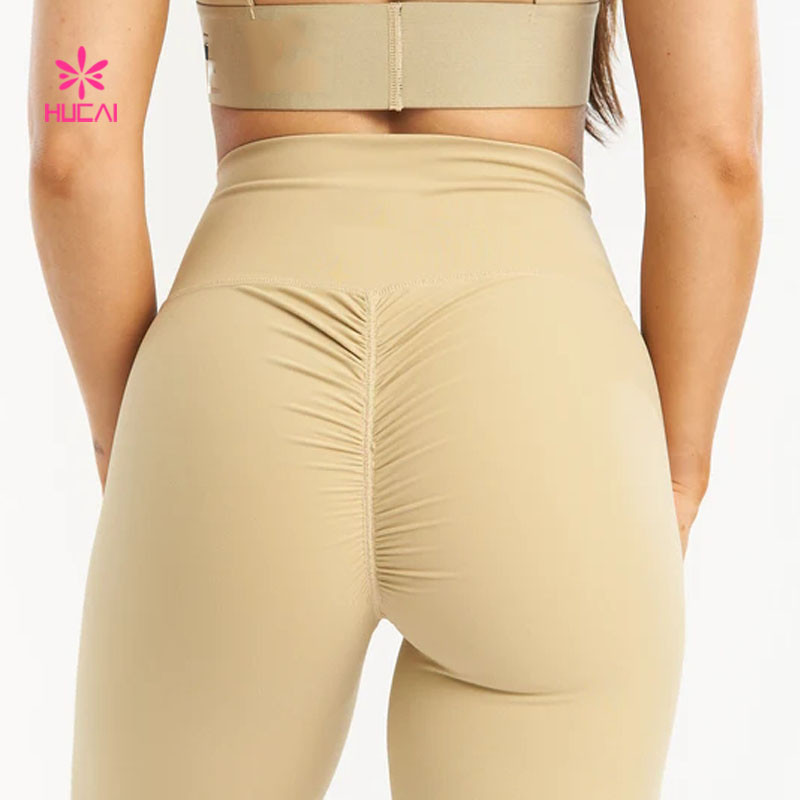
2. What an Invisible Scrunch Costs in Pattern Engineering
A scrunch is created by cutting the centre-back seam with more length than the finished seam requires, then drawing that excess in with elastic. Remove gathering altogether and the lift disappears, which is why the invisible route is described in engineering terms rather than as a styling tweak: the excess length is reduced, and whatever lift is given up has to be recovered somewhere else in the pattern.
The three variables that have to move together
- Gather allowance, expressed as a ratio between gathered length and finished seam length, rather than left to the operator's eye
- Elastic-in-seam elongation, measured after wash rather than only on the sample bench
- Back-rise height and hip grading, re-derived for every size instead of scaled from the base pattern
These three are the reason a low-visibility scrunch is harder to develop than a strong one. Published buyer feedback on sculpting leggings concentrates on exactly this failure mode: an over-tensioned gather produces a visible pinch line, digs in during seated work and distorts after washing, while a thin buttery-soft base pushes the whole load into a single seam. When any one of the three variables is changed in isolation, the other two stop matching the fit the brand approved.
Manufacturing Recommendation: treat gather ratio as a written specification with a tolerance, not a note on a sketch. Re-grade the back rise and hip curve per size, because a shift of roughly 5 cm in back rise between adjacent sizes is normal in this category and a fixed gather allowance will not survive it. Then verify the finished pair on the same test bench used for the crossover waistband leggings with 3D back panelling before a bulk run is scheduled.
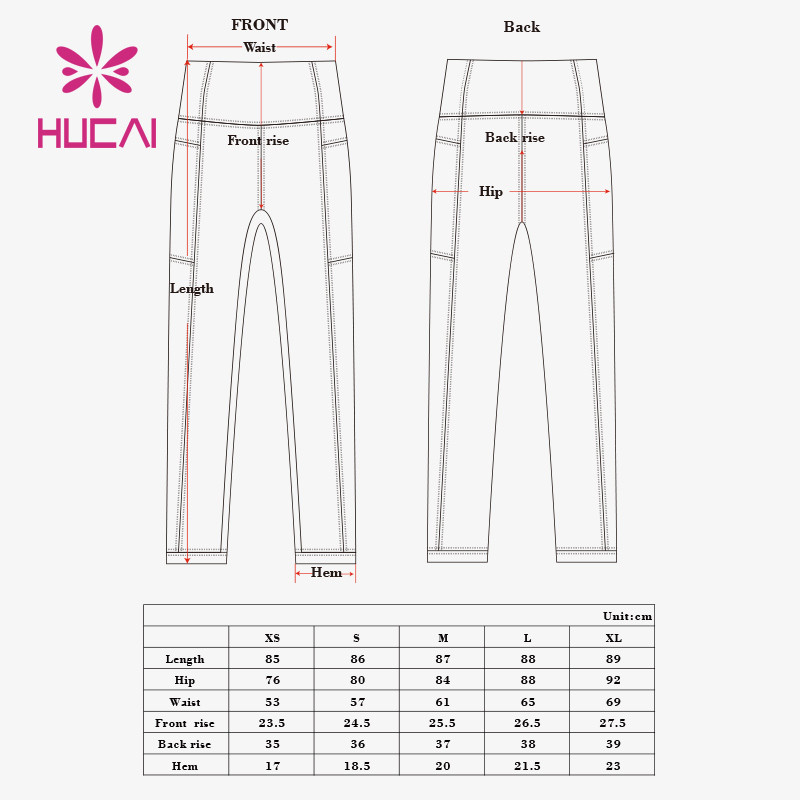
3. Buttery-Soft Fabric and Centre-Seam Stress
The Aura page states its base clearly: 78% Polyamide and 22% Spandex, described as buttery-soft with a second-skin feel and squat-ready support. That is a high-elastane polyamide knit, chosen for handfeel, drape and recovery in equal measure, and it is the reason the invisible route works at all. A softer, finer surface reads as more forgiving, so less gather is needed to suggest the same shape.
Observation: the same properties that make the fabric feel expensive make opacity harder to guarantee. As weight and coverage drop, the centre-back seam stops behaving like a design detail and starts behaving like a load path, and that is the point at which stretch opacity becomes the real deliverable.
Manufacturing interpretation: handfeel targets and opacity targets pull against each other, and the highest-risk zone is a deep shade on a light base with high elastane. Opacity cannot be inferred from a fabric swatch held up to a window, and it cannot be signed off on a pair photographed in studio light. It has to be measured on a stretched, worn garment.
Manufacturing Recommendation: specify the base by construction rather than by feel alone. A high-gauge interlock or a fine brushed knit in the 220-260 GSM range gives the handfeel the customer expects while keeping enough mass to hold opacity once the leggings are stretched. Finish the seam with 4-needle 6-thread flatlock so the join stays flat and elastic instead of building a ridge, and confirm the whole thing with the same squat-proof test that HUCAI Sportswear applies across our seamless and knit development work rather than a one-off bench check.
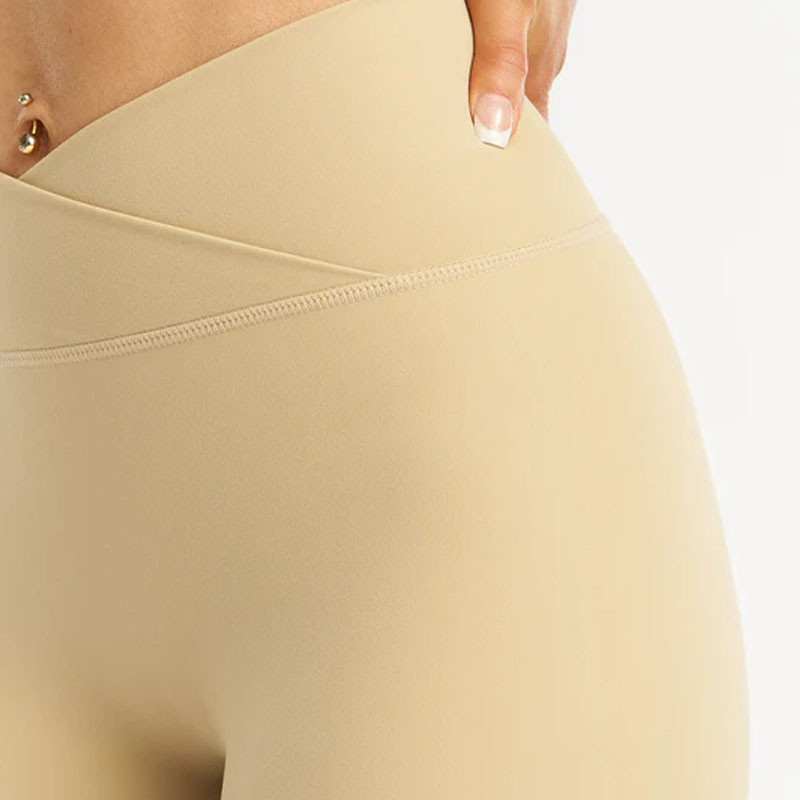
4. Contour Without Gathering
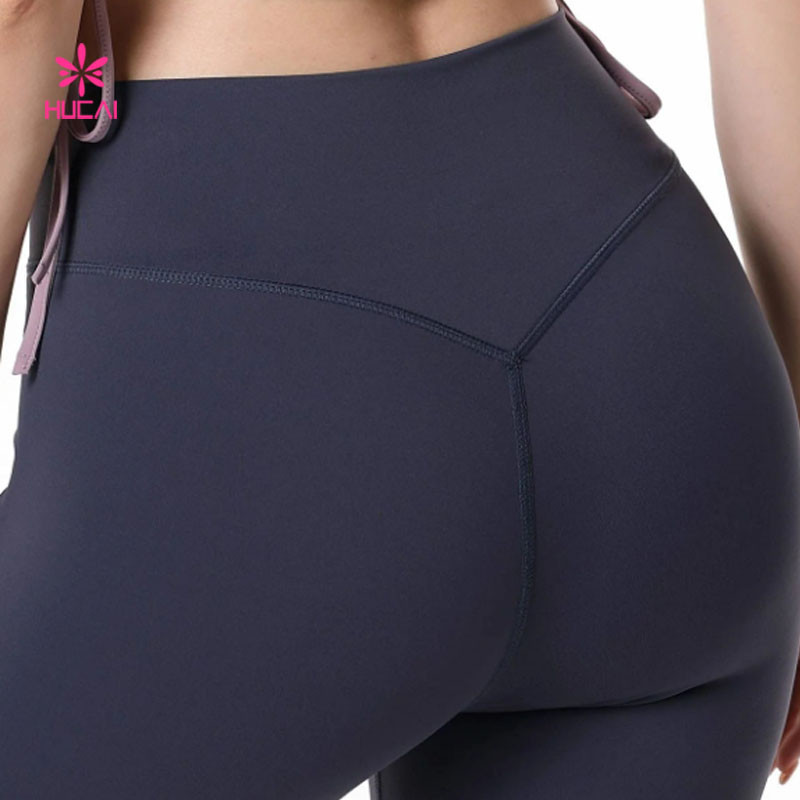
DFYNE's Dynamic V-Back shows the alternative mechanism in the same market. Instead of relying on gathered seam volume, the silhouette is shaped by a V-back mid-rise waistband and glute contouring, with firm scrunch added on top for customers who want it. Strip the gather away and what is left is panel geometry doing the work.
Observation: the two routes make different promises. A gathered seam promises shape from volume. A contour pattern promises shape from where the seams sit, which is a quieter result and the direction the lower-visibility end of the market is moving.
HUCAI Interpretation: for a brand developing its first sculpting style, the contour route is more forgiving on two counts. It does not depend on elastic recovery inside a seam, so lighter and softer bases are viable, and it needs less trial-and-error across sizes. It is not the easy option though: because there is no gather to hide behind, the accuracy of seam placement becomes the entire result, and a yoke that is correct in a M will look misplaced in an XL if the pattern has simply been scaled.
Manufacturing Recommendation: develop the gathered and the contoured version as two separate patterns, even when the brand intends to sell only one, because the fit decision is much cheaper to make at sample stage than after a first run. Both routes can be built on our custom leggings development line from 100 pcs per style and colour.
5. Waistband Roll, Opacity and the Checks Buyers Skip
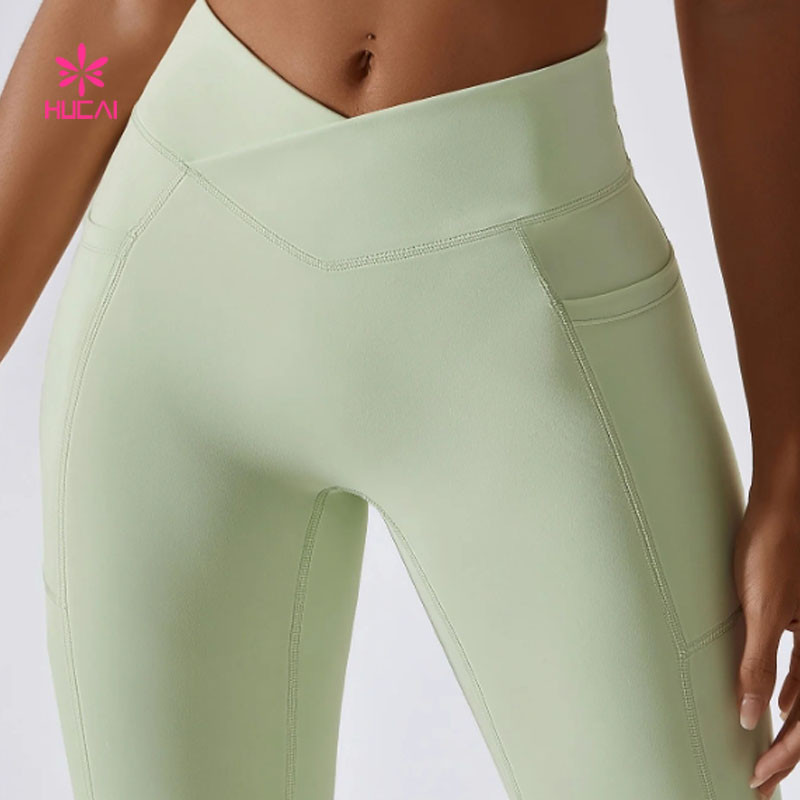
Both reference products anchor the waistband the same way: a mid-rise cross-over sculpt waistband in the Aura specification and a V-back mid-rise waistband on the Dynamic. Cross-over and V-back waistbands are popular for a good reason, because they distribute tension across a diagonal rather than a straight line, and that is what keeps a high-rise legging from rolling during a hinge or a squat.
Observation: the approval moment for most brands is a fit session photographed standing still, and a static photo is exactly the condition under which a cross-over waistband looks safest. It shows none of the three failures that actually generate complaints: waistband roll-over under load, recovery loss after the first wash, and stretch opacity on a deep shade.
Manufacturing interpretation: the checks that get skipped are the ones that cannot be seen in a still image, which means they are also the cheapest to add at sample stage and the most expensive to discover in a shipment. A garment that passes a stand-still review can still fail a squat, and the customer who finds out is the one holding the returns label.
Manufacturing Recommendation: approve every sculpting sample in two states. First on the stand, for seam placement and finish. Then worn through a full squat and lunge, for gather recovery, waistband roll and opacity. Hold the bulk release against both, apply AQL 2.5 at final inspection with 100% key-measurement and seam check, and keep the Grade 4-5 squat-proof result on file per colourway. Our private label gym wear development process runs both reviews as standard, together with custom woven labels, heat-transfer tagless neck labels and branded hangtags when the brand needs a finished retail presentation.
6. Decision Check: Which Route Fits Your Line
Use the comparison below as a specification starting point rather than a ranking. All three rows are producible from 100 pcs per style and colour; the difference is how much of the risk moves into the sample stage.
| Route | How the lift is created | Most forgiving on | Main opacity risk | Development notes |
|---|---|---|---|---|
| Visible scrunch | A centre-back seam cut with a larger gather allowance and drawn in with elastic | Mid-to-heavy high-recovery knits | Moderate, because the seam volume masks localised stretch | Gather ratio must be written into the specification and re-checked at every size |
| Invisible scrunch | Reduced gather allowance, with the lost lift recovered through back-rise height and panel shape | Buttery-soft, high-recovery polyamide knits | Highest, because a light base shows stretch before a heavy one does | Two-state sample review is mandatory: static fit plus a full squat and lunge |
| V-yoke contour | Back yoke and panel geometry only, with no gathered elastic in the seam | Light-to-mid seamless and interlock bases | Lower, because no gathered elastic is stored in the seam | Seam placement accuracy drives the whole result, so grading cannot be scaled blindly |
From Jean Yuan's product-development perspective, an invisible scrunch project is usually decided at the sample stage, because a stand-still fit photo cannot show what the seam does under load. On thinner buttery-soft bases the gathered centre-back seam recovers at a different rate from the body panels, so the same pair has to be reviewed twice: hanging on the stand, and worn through a full squat and lunge. The development room therefore reads gather density, back-rise height and hem tension as one specification, and does not release a bulk run until a single pair has passed both reviews.
7. Questions US and Canadian Sourcing Teams Ask Most
What is the difference between a scrunch legging and an invisible scrunch legging?
Both use a gathered centre-back seam to lift the glute. A scrunch legging uses a larger gather allowance so the seam is clearly visible. An invisible scrunch reduces that allowance and recovers the shape through back-rise height and panel geometry, so the lift is present but the seam is not meant to read as a feature.
Can an invisible scrunch legging be squat-proof in a buttery-soft fabric?
Yes, provided opacity is engineered rather than assumed. A fine brushed knit or high-gauge interlock in the 220-260 GSM range, combined with 4-needle 6-thread flatlock finishing, holds Grade 4-5 opacity in most colourways. Light shades and very light weights need a specific test before the colourway is confirmed.
Does a reduced gather make the leggings less flattering?
It changes where the shaping comes from rather than how much there is. A reduced gather reads as a smoother, more continuous contour, which suits customers who wear the leggings from a class into the rest of their day. Brands targeting a stronger gym-floor statement usually keep the visible version.
What is the minimum order quantity for a custom invisible scrunch legging?
Flexible MOQ starts from 100 pcs per style and colour, and mixed sizing within that run is supported, so a brand can test a new sculpting style without committing to a full size curve in every colour.
How long does development take?
Sample development runs 7-10 working days, or 5-7 working days when suitable fabric is already in stock. Bulk production runs 20-25 working days from approved pre-production sample and deposit, with an expedited sample channel available for seasonal drops.
Can you match a reference legging we already sell?
Yes. Send a physical reference sample, a tech pack or detailed photographs with measurements. The pattern team rebuilds the fit, then adjusts the gather ratio and back-rise grading to your target fabric, and returns a sample for a two-state review before bulk.
Is the gathered centre-back seam comfortable during seated work?
It depends on the gather ratio and the finishing. A modest allowance finished with a flat, elastic seam stays comfortable through seated and low-impact work. An over-tensioned gather is the usual cause of a pinch line, so the ratio is specified with a tolerance and checked after washing.
Closing Summary
The invisible scrunch direction is being driven by a real shift in how women's gymwear is bought, not by a styling trend: the same lift is wanted with less visible construction. Three decisions carry most of the risk.
- Choose the route before the fabric. A visible gather and a reduced gather need different bases, and reversing the order is what produces a first run that washes out of shape.
- Write the gather ratio, the elastic elongation and the back-rise grading as one specification, tolerances included, and re-derive them per size rather than scaling.
- Approve every sculpting sample in two states, static and loaded, and keep the Grade 4-5 squat-proof result on file for each colourway.
HUCAI Gymwear develops matching sets, sculpting leggings and sports bras for DTC labels, studios and private label buyers across the US, Australia and Canada, combining 20+ years of factory pattern experience with cosmetic finishing such as woven labels, tagless heat-transfer neck labels and branded packaging. Current sculpting and matching-set styles are listed in our new arrivals collection.
100 pcs flexible MOQ per style and colour
7-10 day sample development, 5-7 days with stock fabric
20-25 day bulk production from approved pre-production sample
AQL 2.5 inspection and Grade 4-5 squat-proof testing on every bottom