Seamless Sculpting Without Harsh Compression: Knit Mapping and Recovery
- Share
- publisher
- HUCAI Gymwear
- Issue Time
- Sep 28,2026
Summary
Two September 2026 seamless launches show the category moving away from harsh compression: Gymshark's 86/14 nylon-elastane Everyday Seamless Flared Leggings and Alphalete's sculpting-knit Vortex Bra. This guide explains how HUCAI Gymwear engineers knit mapping, elastic recovery and squat-proof opacity zone by zone for US, Canadian and Australian gymwear brands, from a flexible MOQ of 100 pcs per style and colour.
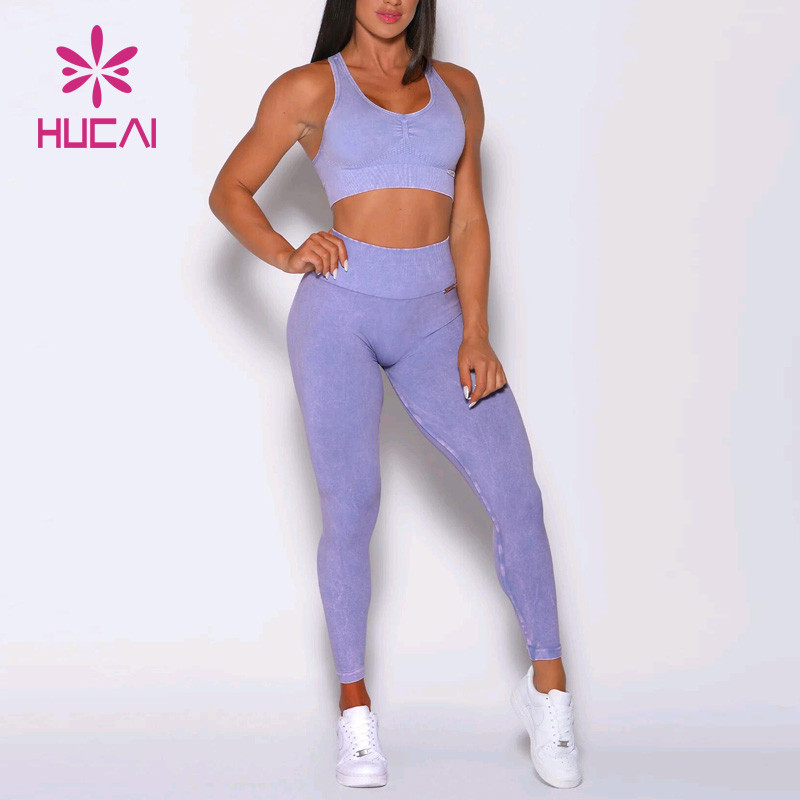
Seamless Sculpting Without Harsh Compression: Knit Mapping and Recovery
Two product pages published in the same season describe seamless gymwear in almost opposite terms. Gymshark's Everyday Seamless Flared Leggings is built from 86% Nylon and 14% Elastane in a lightweight seamless knit with four-way stretch and a soft second-skin feel, with subtle contouring around the glutes and waist, and the brand states openly that the style is not 100% squat-proof and may become sheer when stretched. Alphalete's September 2026 Vortex Bra takes the other route: seamless construction with sculpting knit textures, low-impact support and a minimal front over a structured strappy back, in 51% Polyamide, 38% Polyester and 11% Elastane. HUCAI Gymwear, engineered by HUCAI Sportswear, reads that split as a knit-engineering decision rather than a styling one, because the moment a brand stops using compression to shape a garment, the knit structure and its recovery have to carry the whole result at 100 pcs per style and colour.
Sources reviewed: the Gymshark Everyday Seamless Flared Leggings official product page (86% Nylon / 14% Elastane, lightweight seamless fabric, four-way stretch, soft second-skin feel, subtle contouring around the glutes and waist, plus the brand's own note that the style is not 100% squat-proof and may become sheer under stretch) and the Alphalete September 2026 collection page for the Vortex Bra (seamless construction with sculpting knit textures, low-impact support, minimal front and structured strappy back, 51% Polyamide / 38% Polyester / 11% Elastane). Observation: neither page sells maximum squeeze. One foregrounds a light, soft handfeel even while disclosing an opacity limit, and the other foregrounds mapped knit texture with deliberately low-impact support. Seamless is being repositioned from a promise of hold to a promise of feel.
Seamless sculpting without harsh compression depends on two things: a zone-by-zone knit map that sets a different gauge and density for the waistband, glute panel, thigh and hem, and an elastic recovery target that is measured after washing rather than assumed from a flat swatch. Build the shaping into the knit structure, keep the waistband low-tension, finish with 4-needle 6-thread flatlock, and hold a Grade 4-5 squat-proof result per colourway. A flexible OEM partner such as HUCAI Gymwear develops this from 100 pcs per style and colour.
Inside This Guide
- 1. Why Seamless Stopped Meaning Tighter
- 2. Knit Mapping: How Density Changes Zone by Zone
- 3. Recovery: The Property Compression Cannot Buy
- 4. The Opacity Trade-Off Behind a Lighter Knit
- 5. Sculpting Without Pressure Marks
- 6. Decision Check: Which Seamless Route Fits Your Line
- 7. Questions US, Canadian and Australian Buyers Ask Most
Who This Guide Is For
It is written for product owners, designers and sourcing managers building women's gymwear for the US, Canadian and Australian markets:
- DTC and creator-led labels adding a seamless sculpting style to an existing capsule
- Pilates, barre and yoga studios commissioning member-ready seamless sets
- Private label buyers replacing a cut-and-sewn bottom with a circular-knit version
- Brands whose customers have complained about digging waistbands or visible pressure marks
Manufacturing Parameters Referenced in This Guide
- Flexible MOQ from 100 pcs per style and colour, with mixed sizing supported
- Sample development in 7-10 working days, or 5-7 days where stock fabric is available
- Bulk production in 20-25 working days from approved pre-production sample and deposit
- AQL 2.5 inspection with a 100% key-measurement and seam-integrity check before shipment
- Grade 4-5 squat-proof opacity test applied to every bottom before packing
1. Why Seamless Stopped Meaning Tighter
The Gymshark page is unusually specific about what the fabric is asked to do. An 86% Nylon and 14% Elastane blend is presented as a lightweight seamless knit with four-way stretch and a soft second-skin feel, and the shaping is described as subtle contouring around the glutes and waist rather than as firm hold. The same page is equally specific about the limit of that construction, stating that the style is not 100% squat-proof and may become sheer when stretched. Alphalete's September 2026 Vortex Bra sits on the same shelf with a different emphasis again: seamless construction combined with sculpting knit textures, low-impact support, and a minimal front against a structured strappy back.
Observation: read together, these two launches show seamless being sold on tactility and mapped texture rather than on tightness. A brand that has spent years using compression as shorthand for quality now has to describe what the knit itself does, and one of them is honest enough to publish where that construction stops.
Manufacturing interpretation: compression is the most direct way to create the sensation of support, because it needs no engineering beyond a firmer fabric and a smaller pattern. Removing it does not remove the requirement, it relocates the requirement into the knit map, the waistband tension and the elastic recovery of the yarn. That is a harder brief to write and a harder brief to approve, which is why so many first seamless styles arrive either too thin to be opaque or too tight to be comfortable.
Manufacturing Recommendation: fix the three targets in writing before the fabric is selected. State the target handfeel, the target stretch percentage at the hip, and the target opacity grade per colourway. When those three are agreed first, the knit structure can be engineered against them instead of being corrected after the first fit session.
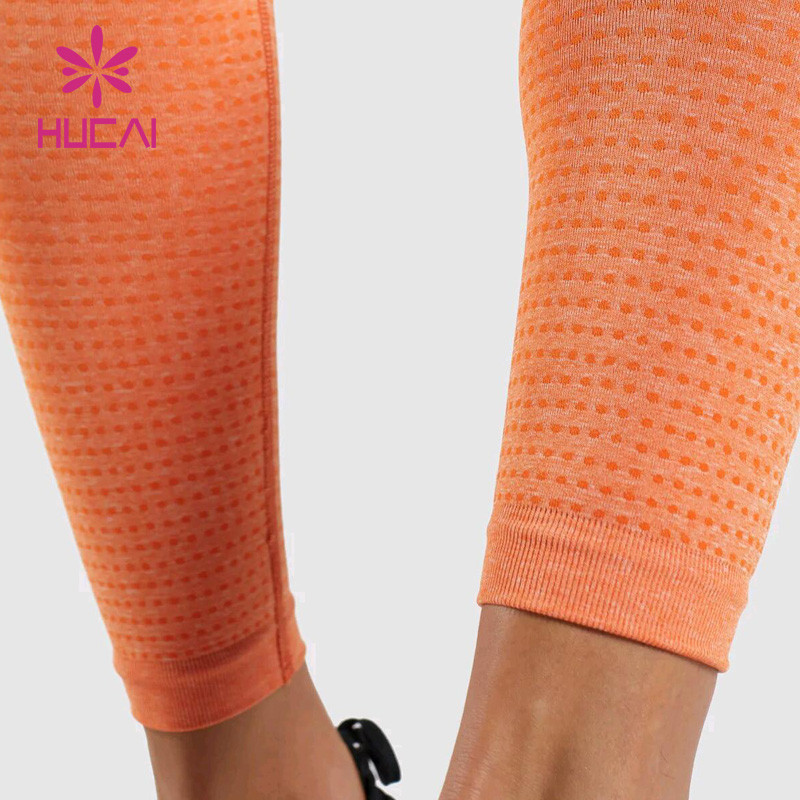
2. Knit Mapping: How Density Changes Zone by Zone
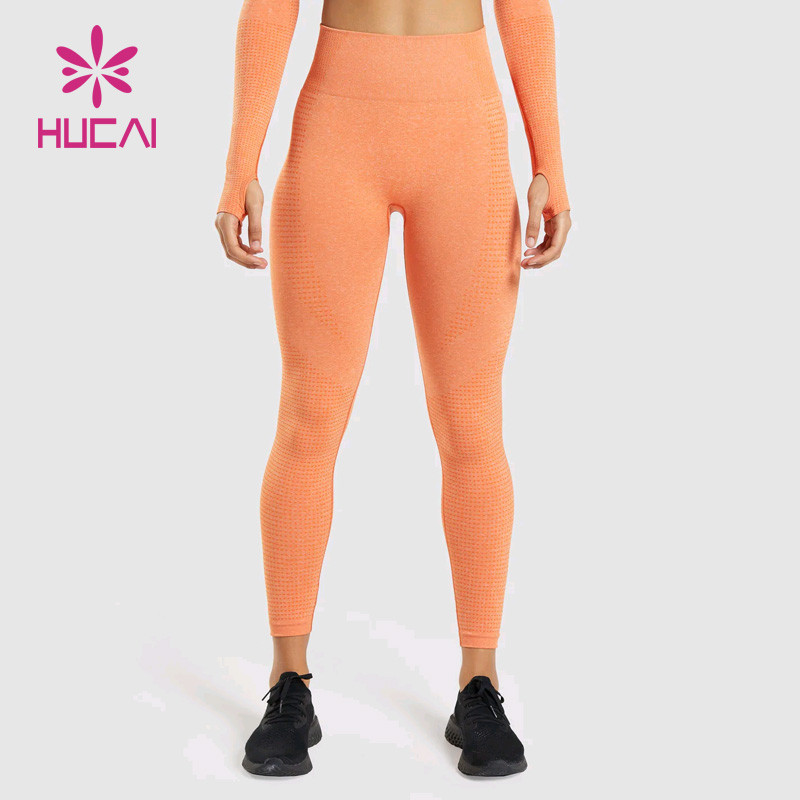
A seamless legging is knitted as a near-continuous tube, which means there are very few seams available to shape it. What replaces them is knit mapping: knitting a different structure, gauge and density into different zones of the same garment. Alphalete's description of sculpting knit textures and Gymshark's subtle contouring around the glutes and waist both depend on exactly that mechanism, whether or not the customer is told about it.
Observation: a buyer reads a mapped zone as a design line, a rib detail or a ventilation panel. The mill reads the same zone as a density instruction, because a zone with a tighter structure holds differently from a zone with a more open one, and the boundary between them is where the garment will either sit flat or start to pull.
HUCAI Interpretation: the failure mode that generates returns is not an ugly zone, it is a zone map that was never reconciled with grading. When one area of a circular knit is knitted denser, it also shrinks differently, so the finished relationship between waistband, hip and thigh changes from size to size. A zone map that looks correct on a size M sample can produce an unstable waist-to-hip ratio on a size XL if the zones were simply scaled rather than re-derived.
Manufacturing Recommendation: write the knit map as a specification table before sampling, listing each zone with its structure, gauge and target density, then confirm the measured waist, hip and thigh relationship for every size rather than only the base size. Keep the mapped zones on a density difference that a knitting machine can hold repeatably, and verify each zone after a wash cycle, because that is when a mapped knit either settles or drifts.
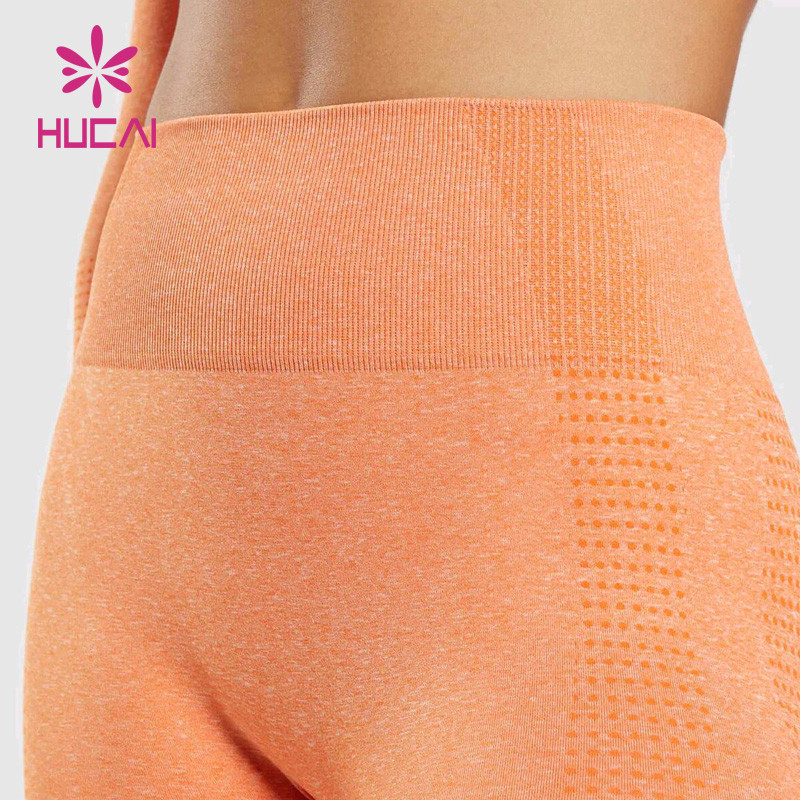
3. Recovery: The Property Compression Cannot Buy
Recovery is a garment's ability to return to its original dimensions after it has been stretched, and it is the property that makes a low-compression seamless style viable at all. Both reference products lean on it. Gymshark pairs 86% Nylon with 14% Elastane for four-way stretch, and Alphalete's Vortex Bra uses 51% Polyamide and 38% Polyester against 11% Elastane, a blend in which a comparatively small share of elastane is expected to govern how the whole knit behaves.
Observation: the lighter and softer the knit, the more of the fit depends on elastic recovery rather than on fabric mass. A heavier, more compressed fabric can hide a mediocre recovery because the garment is stiff enough to hold its own shape. A light second-skin knit has nothing to hide behind, so any loss of recovery shows up as bagging at the knee, a rolling waistband or a hem that no longer sits where it was approved.
Manufacturing interpretation: recovery and opacity are the two properties most often promised and least often measured. Both can look correct on a flat swatch on a bench and both can fail on a worn, stretched garment, which is why a swatch approval tells a buyer almost nothing about the finished product.
Manufacturing Recommendation: specify recovery as a target measured after wash rather than on delivery, and finish the joins with 4-needle 6-thread flatlock so the seam stretches with the knit instead of restricting it. Hold the bulk release against the same recovery and Grade 4-5 squat-proof result that HUCAI Sportswear applies across our seamless development work, and keep that result on file per colourway rather than per style.
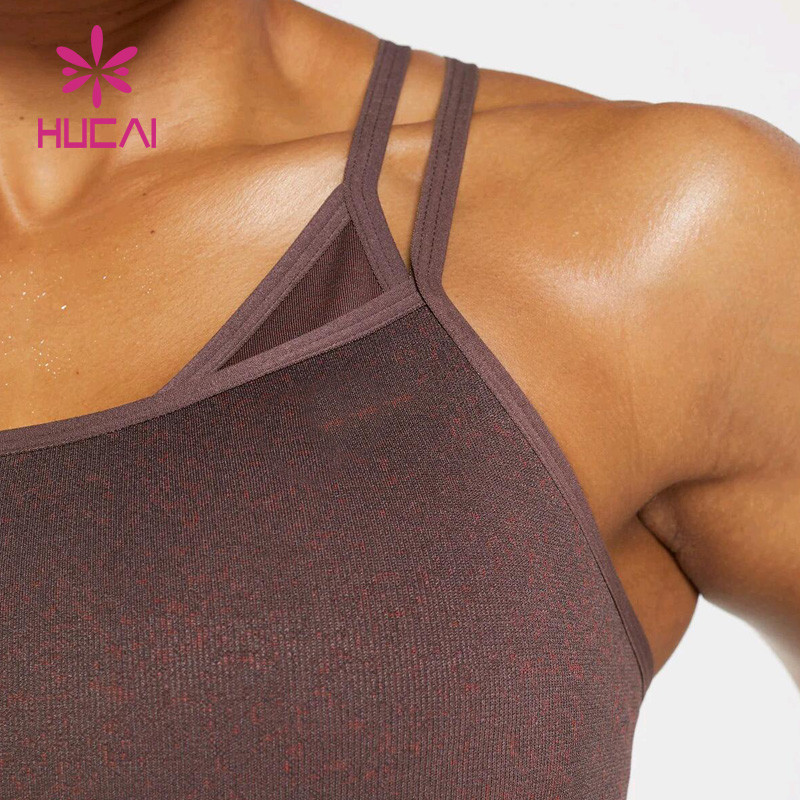
4. The Opacity Trade-Off Behind a Lighter Knit
The most useful line in the two reference pages is Gymshark's own disclosure that the Everyday Seamless Flared Leggings is not 100% squat-proof and may become sheer when stretched. That statement is a fact about a lightweight seamless knit rather than a defect: as mass comes down, the fabric has less material available to block light once it is under tension.
Observation: opacity is not a fixed property of a fabric, it is a function of mass, shade and stretch working together. A mid-tone knit that reads solid on a hanger can thin visibly over the glute when the same garment is squatting, and the effect is strongest exactly where mapped zones are most open and where the shade is lightest.
Manufacturing interpretation: for an emerging brand the commercial risk is not that a style is slightly less opaque, it is that opacity was never written down as a deliverable. A brand that accepts a lighter knit for its handfeel without setting an opacity floor will discover the limit on the customer's body rather than on the test bench, and that discovery arrives as a return rather than as a note.
Manufacturing Recommendation: set an opacity floor per zone and per colourway, then test it on a stretched, worn garment under gym lighting instead of holding a swatch up to a window. Where a light shade and an open mapped zone overlap, increase density in that zone or adjust the shade rather than accepting the gap, and record the Grade 4-5 squat-proof result for each colour before bulk. A representative seamless development of ours is set out on our private label seamless leggings and sports tights programme.
5. Sculpting Without Pressure Marks
Both reference products anchor the waist gently: Gymshark describes subtle contouring at the glutes and waist, and Alphalete pairs low-impact support with a minimal front and a structured back. That is a deliberate choice to let the knit map suggest shape rather than to compress the body into it.
Observation: the direct cost of using compression for shaping is the pressure mark. A waistband knitted too tight, or a mapped zone that grips harder than the zone beside it, leaves a ridge on the skin and is remembered as an uncomfortable garment even when the silhouette was exactly what the customer wanted.
Manufacturing interpretation: the sculpting effect of a seamless garment comes from where the knit is denser and where the waistband sits, not from how hard the whole tube squeezes. Over-mapping is the usual error, because each added zone is easy to justify in isolation and the total effect is only judged on the body.
Manufacturing Recommendation: approve every seamless sample in two states, first on the stand for zone placement and finish and then worn through a full squat, lunge and seated rotation for waistband roll, pressure marks and opacity. Hold the bulk release against both reviews, apply AQL 2.5 at final inspection with 100% key-measurement and seam check, and pair the fit with the finishing a wholesale line needs, including woven labels, heat-transfer tagless neck labels and branded packaging. Our private label gym wear development process runs those reviews as standard.
6. Decision Check: Which Seamless Route Fits Your Line
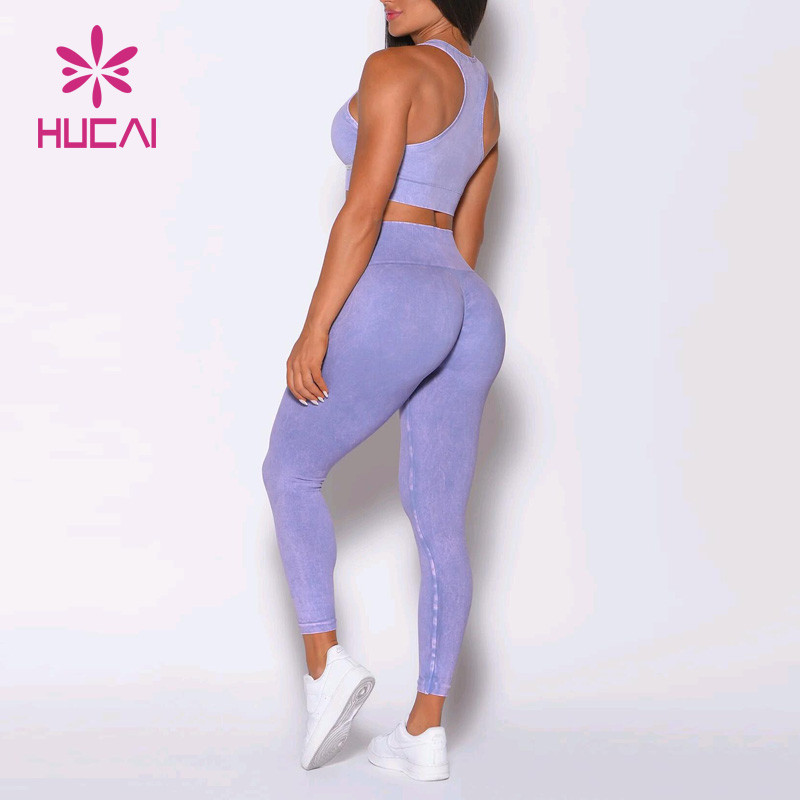
Treat the comparison below as a specification starting point rather than a ranking. All three routes are producible from 100 pcs per style and colour; what changes is how much of the risk is absorbed at sample stage and how much depends on measuring the knit.
| Route | How the shaping is created | Recovery dependency | Opacity risk | Development notes |
|---|---|---|---|---|
| Mapped seamless sculpt | Zone-by-zone knit density and contours knitted into a continuous tube | High, because there is no seam or panel to help hold the shape | Moderate to high, concentrated in the most open mapped zones | The zone map must be re-derived per size instead of scaled, and measured after wash |
| Light second-skin seamless | Minimal mapping with a soft, low-tension waistband and subtle contour only | Highest, because fabric mass is not available to help hold the fit | Highest, and lighter shades reach the limit first | An opacity floor per colourway is mandatory before this route is confirmed |
| Cut-and-sewn interlock | Panel geometry and seams, with structure added through fabric weight | Moderate, because panels and seams assist the fit | Lower, because heavier interlock blocks more light | Handfeel will read firmer than seamless unless the knit is specified carefully |
From Jean Yuan's product-development perspective, the mistake in a low-compression seamless program is nearly always the same one: a zone map approved on a flat swatch and a stand-still fit photo. A circular knit changes dimension once it is worn and washed, so the waistband can measure correctly on the bench and still roll during a hinge, and mapped zones can look balanced while gripping unevenly on the body. In the development room the map, the waistband tension and the recovery target are therefore treated as a single specification, and a bulk run is not released until one garment has passed both the stand review and a worn squat and lunge review in the approved colourway.
7. Questions US, Canadian and Australian Buyers Ask Most
Can seamless gymwear sculpt without using tight compression?
Yes. In a seamless garment the shaping comes from knit mapping, meaning a different structure and density in the waistband, glute, thigh and hem zones, together with a low-tension waistband. That produces contour without the pressure that a compressed tube creates, provided the zone map is graded per size rather than scaled.
What does knit mapping actually mean in production?
It means specifying, zone by zone, which knit structure and gauge is used and what density it should reach, then knitting those zones into one continuous tube. Each zone is documented in the specification and checked after washing, because a denser zone also shrinks differently from a more open one.
How do you guarantee opacity on a lightweight seamless legging?
By setting an opacity floor per zone and per colourway and testing it on a stretched, worn garment under gym lighting rather than on a flat swatch. Lighter shades and more open mapped zones are tested first, and the Grade 4-5 squat-proof result is recorded for every colour before bulk.
Why does elastic recovery matter more in a soft knit?
A heavier, firmer fabric can hold its shape even with modest recovery, because the fabric itself is stiff. A light second-skin knit has no such margin, so recovery governs whether the garment returns to its approved dimensions or bags at the knee and rolls at the waist after washing.
How do you stop a seamless waistband from leaving pressure marks?
Keep the waistband low-tension rather than firm, and let the knit map carry the contour instead of the elastic. Review the sample worn through a full squat, lunge and seated rotation, since a pressure mark is only visible once the garment is on a body under load.
What is the minimum order quantity for a custom seamless set?
Flexible MOQ starts from 100 pcs per style and colour, with mixed sizing supported within that run, so a brand can test a mapped seamless style in one colour before committing to a full size curve in every colourway.
How long does a seamless development run take?
Sample development runs 7-10 working days, or 5-7 working days when suitable fabric is already in stock. Bulk production runs 20-25 working days from approved pre-production sample and deposit, with an expedited sample channel for seasonal drops.
Can you match a seamless reference sample we already sell?
Yes. Send a physical reference sample, a tech pack or detailed photographs with measurements. The pattern and knit team rebuild the construction, then re-derive the zone map and waistband tension against your target fabric and return a sample for a two-state review before bulk.
Closing Summary
The move away from harsh compression in seamless gymwear is being driven by what customers are actually buying: shape and tactility rather than squeeze. Three decisions carry most of the risk in that shift.
- Write the knit map as a specification, zone by zone, and re-derive the waist, hip and thigh relationship for every size instead of scaling one accepted sample.
- Set an opacity floor and a recovery target per colourway, and measure both on a stretched, washed garment rather than on a flat swatch.
- Approve every seamless sample in two states, static and worn under load, and keep the Grade 4-5 squat-proof result on file before the bulk run is scheduled.
HUCAI Gymwear develops seamless sets, sculpting leggings and sports bras for DTC labels, studios and private label buyers across the US, Australia and Canada, combining 20+ years of pattern and knit development experience at HUCAI Sportswear with finishing such as woven labels, tagless heat-transfer neck labels and branded packaging. Current seamless and sculpting styles are listed in our seamless sportswear collection and in new arrivals.
100 pcs flexible MOQ per style and colour
7-10 day sample development, 5-7 days with stock fabric
20-25 day bulk production from approved pre-production sample
AQL 2.5 inspection and Grade 4-5 squat-proof testing on every bottom